Does only the present exist?
David W. Agler
The Pennsylvania State University
Presentism
Four theories of time
| Theory | A or B | Temp. ontology | Temp. passage |
|---|---|---|---|
| Eternalist | B | eternalist | static |
| Presentist | A | presentist | dynamic (ontological) |
| Growing Block | A | past-presentist | dynamic (ontological) |
| Moving Spotlight | A | eternalist | dynamic (property) |
Goals
This time:
- Define the presentist theory
- Clarify some features of the theory
- Distinguish two versions of the theory
Next time:
- Evaluate the theory
- Decide if we are presentists
Defined
Presentism
- A-theory
- presentist temporal ontology
- Ontological-change dynamic theory of temporal passage: time passes because what exists changes
Ingram writes that “I say that there are two elements to presentism as a theory of time, an ontological thesis and a dynamical thesis.”
A theory
- There is an objective present
- It is true (or false) to say “Event E is in the present” (made T or F by the world).
- Specify the position of events from present
Temporal ontology
There is considerable debate about the presentist’s view of temporal ontology: only present stuff exists.
C1 - What exists
Presentists say the only entities that exist are in the present
- Objects
- Events
- Properties
C2 - Abstracta
Presentists do not have a unified view on abstracta:
- If abstracta are outside of spacetime, they don’t exist
- If abstracta exist outside of space but not time, they exist in the present.
- Presentism is only talking about objects in the physical universe so it has nothing to say about abstracta
C3 - Always
- It always the case that the only entities that exist are in the present
- The only entities that exist are in the present.
Formulation (1) is a better explanation than formulation (2)
C4 - Persons
Applied to our own existence:
- The only you that exists is the present you.
- There is no past or future you.
If someone where to love you, they would only need to love the you that is here right now (not a past or future you).
C5 - Distant objects
- Mars exists (but it is far away)
- French people exist even if we can’t see them from right here.
- Are people and objects in the past and future just like people far away from us?
No. Distant times are not like distant places.
Temporal passage
- Dynamic theory: Time passes.
- Ontological change: Time passes because there is change in the world: new times.
- Entities change: origination, annihilation, modification
C1 - Example
- The banana survives but there is a new time (new object that corresponds to a complete and consistent description of the world)
- The change is a gain (and loss) of a property (ripeness)
Two varieties
There are two different versions of presentism
- Solipsistic presentism
- Dynamic presentism
Other minds?
Solipsism
- What evidence do you have that your mind exists?
- What evidence do you have that other minds exist?
Solipsism
Solipsism
Solipsism is a theory the only mind for which we can be certain that it exists is our own.
The basic argument for the theory usually depends upon
- We have direct, definitive proof that our own mind exists.
- Our evidence that other minds exist is indirect (from behavior)
Solipsistic presentism
Solipsistic presentism
Solipsistic presentism is the theory that there is one and only one present that exists and that has ever existed. It is the one that we are in right now!
- There were no prior present momements
- Past is an illusion
Solipsistic presentism (argument)
- P1: I have no direct and definitive empirical proof that other times exist.
- P2: I do have direct and definitive empirical proof that this time (the present) exists.
- P3: I should only accept the truth of propositions for which I have direct and definitive empirical proof.
- C: Therefore, this time (the present) is the only time that I can say exists, has ever existed, or will ever exist.
Problem 1 - Against intuitions
- Standard or proof is way too high: only accepts things we have immediate direct access to.
- Implies Dinos never existed
- Implies you never were a child
Problem 2 - Explanatory power
Where did these things come from?
- Fossils?
- Memories?
- Mountains
If you accept past presents, you can say they once existed.
Problem 3 - Instaneous knowing
Solipsistic argument: we have direct (instaneous) knowledge of our own minds (of the present).
No, it is inferred.
Dynamic presentism
Solipsistic presentism
Reality consists of successive present moments.
- Present time \(t_1\) exists
- There is a change to what exists via causation, God, etc
- Results in a new present time \(t_2\)
The old time \(t_1\) did exist (was present) but no longer exists.
Example
- John is 5’11. He is in the present.
- He grows one inch. Change! There is a new time!
- He is 6’0 in the present.
A change to what exists ushers in a new time (new present)
Exercise
Exercise
You know have the theory of presentism before you. Create a picture or diagram that captures the core idea of presentism. Feel free to label the diagram to make things clear.
Extra Credit
- Go to the 2020 PhilPapers Survey
- Answer the following questions:
- What percentage of philosophers are A-theorists, B-theorists, Agnostic / Undecided
- For “temporal ontology”, what percentage of philosphers accept Presentism, Eternalism, or the Growing Block
- For “time travel”, what percentage of philosophers believe (1) it is possible vs. (2) impossible
- Provide your opinion on each of these.
Arguments for and Against
Arguments for Presentism
- From intuitions
- From free will
- From thinning tree view
- From the confinement doctrine
Argument 1: From intuitions
Presentism is taken to be intuitive, common sense.
- Accords with distinction between P, N, F that is ontologically grounded
- P = Previous present (does not exist)
- N = Present (exists)
- F = Future present (will exist)
- Present is most real: it is what we are experiencing now.
Potential problems
- Other theories posit a difference between P, N, F.
- Other theories say present is real.
Challenge: is the theory really “more intuitive” or “agrees with common sense” more than otehr theories.
Argument 2: Free will
- P1. We are free.
- P2. If the future already exists, then we could not act otherwise (we can only do what we have already done in the future)
- P3. The only view consistent with free will then is presentism.
- C. Therefore, we ought to accept presentism.
Similar arguments can be made for things that depend upon free will, e.g., moral responsibility, punishment, divine judgment.
Problems
- O1. We are not free.
- O2. We could be compatibilists using conditional interpretation of free will.
- O3. Another theory (GBT) accepts that the future does not already exist.
Argument 3: Thinning tree
Definition
The thinning-tree view of the universe is the view that (1) the future is an open set of possibilities (Open future) and (2) the passage of time plays a role in the actualization of these future possibilities.
- P1. Thinning tree view of the universe is true.
- P2. Presentism is consistent with this view.
- C. Therefore, we ought to accept presentism.
Thinning tree
Problems
- O1. Thinning tree view is false.
- O3. Another theory (GBT) accepts this view, probably more accurately.
Argument 4: Confinement Doctrine
- P1: The only conscious experience we have is of present events: events occurring in the present in the world (confinement doctrine).
- P2: Presentism says that the only events that exist are those in the present.
- C: Therefore, the best theory is presentism.
Examples
- I am watching a baseball game in person. Therefore, this baseball game is in the present.
- I am eating a sandwich. Therefore, both me and the sandwich are in the present.
- I am looking at a star in the night sky. Therefore, the star is in the present.
Problems
Confinement doctrine
The only conscious experience we have is of present events: events occurring in the present in the world (confinement doctrine).
Exercise
What problems can you think of for the confinement doctrine?
Visual Summary
Objections to Presentism
- Criticisms of arguments (free will, thinning tree, confinement)
- STR
- Problem of temporary intrinsics
- The grounding problem
Grounding Problem
Need a few definitions
- Contingent proposition
- Contingently true proposition
- Grounding principle
- Truthmaking principle
- Independent of the past principle
Contingent proposition
Contingent Proposition
A proposition \(P\) is contingent if and only if there is some possible world \(w_1\) where \(P\) is true and some world \(w_2\) where \(P\) is false.
- \(P\) is T in some world \(w_1\)
- \(P\) is F in some world \(w_1\)
Contingently true proposition
\(P\) is contingently true iff it is true in this world but false in at least some other possible world.
“David is 6’0.”
- True in this world
- False in worlds where I am taller or shorter.
Grounding principle
Grounding principle
Every contingently true proposition \(P\) about the world depends for its truth on the world.
- The truth of a P is grounded in the world.
- P is not just true because
- It is true because the world is such-and-such way.
Example
“David is 6’0.””
- True or False.
- If true, then it is made true by a certain object (me) and whether I have a certain property (certain height).
Truthmaking and supervenience
truthmaking principle (TMP)
Necessarily, for any contingently true proposition \(P\), there exists something \(TM\) (its truthmaker) that makes \(P\) true.
- David is 6’0. Truthmaker: David, property of 6’0.
- This substance is carbon. Truthmaker: substance in the world, substance has six protons
- Unicorns exists. Truthmaker: None.
Extra credit
Extra Credit
There are a few problems with explaining grounding using truthmaker principle. One approach is to use the supervenience principle. Read the portion of the book, explain supervenience, explain what problem of the truthmaking principle it solves.
Independent of the past
Independent of the past principle
Past truths do not depend upon what happens in the present.
- There were dinosaurs.
- Napolean died on 5 May 1821.
These facts do not depend upon present facts.
Grounding argument
- Grounding: Contingently true propositions are grounded in the world (have truthmakers).
- There are contingent true propositions about the past (“dinos existed”)
- Independence: Past facts do not depend upon present facts.
- Presentism: Reality is limited to the present: only present objects (and their instantiation patterns) exist.
- Therefore, presentism cannot ground contingently true propositions about the past.
Presentist responses
- Bite the bullet: there are no truths about the past
- Redefine truth
- Present record truthmaking
- Appeal to a special kind of grounding
R1: Bite the bullet
- Really biting: Sentences about past events do not need to be grounded since there are no past truths
- Cheating: Propositions are true but don’t need to be grounded (nothing makes them true, but they are).
R2: Redefine truth
Presentist truth
A proposition \(P\) is true iff \(P\) is derivable from presently existing objects and their instantiation patterns.
What is true is what can be inferred about the past from the present state of affairs.
Illustration
“Dinos existed.”
- Take the present facts (laws, fossils, etc.)
- Take present laws of nature
- Laws + facts entail Dinos.
Problem: Buried secrets
“This dino existed.”
- Fossils completely destroyed (just dust)
- Indeterministic world
- No way to derive the truth about whether the dino existed.
Exercise
Commit the perfect crime.
R3: Present record truthmaking
Another approach is not to say that past truths are made true by what is derivable from present facts, but past truths are made true by present facts.
Present record truthmaking
Past tensed truths are made true by the present way the world is.
Lucretian properties
- Monday: Lump of clay
- Tuesday: Shape it into a statue
- Wednesday: Smash it into the lump
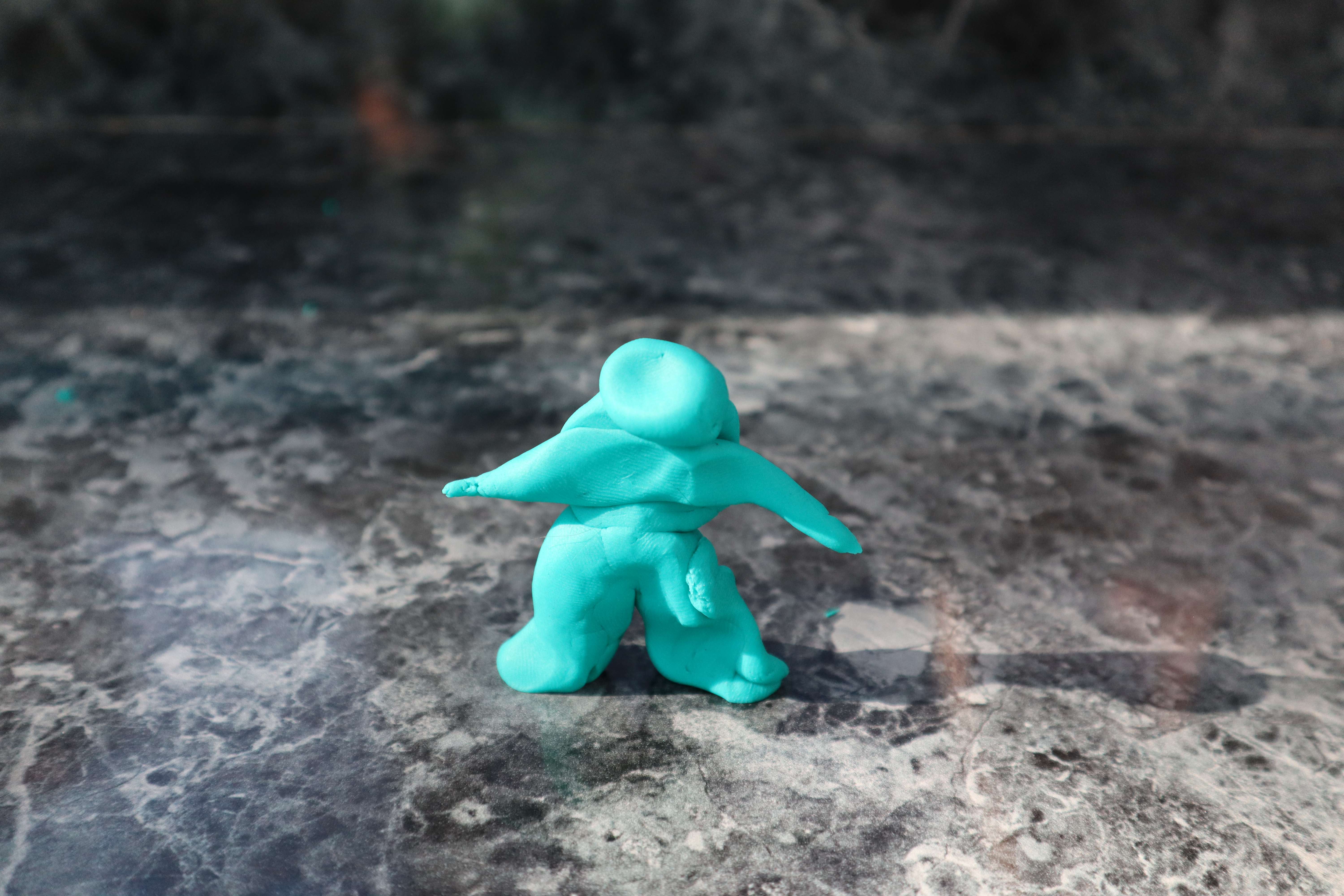
Lucretian account
Problem 1: Weird
My grandma is cremated.
“I loved my grandma”
- Option 1: I love are the ash particles that have the Lucretian properties of having been grandma.
- Option 2: I love a past object: My grandma!
Option 2 is more natural but implies past objects.
Problem 2: Unverifiable
- Suppose two worlds \(w_1\) and \(w_2\) and both have statues.
- Which statue has the Lucretian property of having been a lump?
- Unverifiable, untestable.
R4: Alternative grounding
For normal grounding, we assume there is something that makes the sentence true.
P-grounding: Every true proposition depends for its truth on how the world was, is, or will be.
Westphal writes “a proposition can be true only if there is or was something in virtue of which it is true.”
Response
- This is ontological cheating again.
- You are saying P is true but there is nothing that makes P true.