flowchart LR
    t1[you wake up]
    t2[brush teeth]
    t3[get dressed]
    t4[go to metaphysics]

t1 --> t2 --> t3 --> t4
Intuitions about time
Abstract
Slides for Metaphysics.
Intuitions about time
Goals:
- Sense of the many beliefs people have about time
- Understand the core intuitions about time
Later
- Clarify these intuitions
- Determine if they are true
- Create a theory of time
Many time beliefs
Core intuitions
There are four core intuitions about time:
Intuition 1
- Exclusive. the categories of P, N, F carve events at the joints: no past-present or past-future category.
- Exhaustive. all events fall into these categories: No superfuture or hyperpast.
Intuition 1
- We understand the world through our ideas, concepts, categories
- Intuition 1 is about our conceptual understanding of events.
- We understand events in the world as being divided into these categories
Intuition 2
- Intuition 1 is about how we conceptualize the world.
- Intuition 2 is saying this way of conceptualizing the world is rational because events in the world really are divided up this way.
Clarification
- There are some ways I understand the world that do not correspond to how the world really is.
- Not every way you “see” the world corresponds with how the world is.
Example 1. Earth rotation
- Natural conception: Earth is a stationary object and the sun moves.
- Reality: Movement of the Sun is the result of Earth’s rotation
Example 2. Three-dimensionality
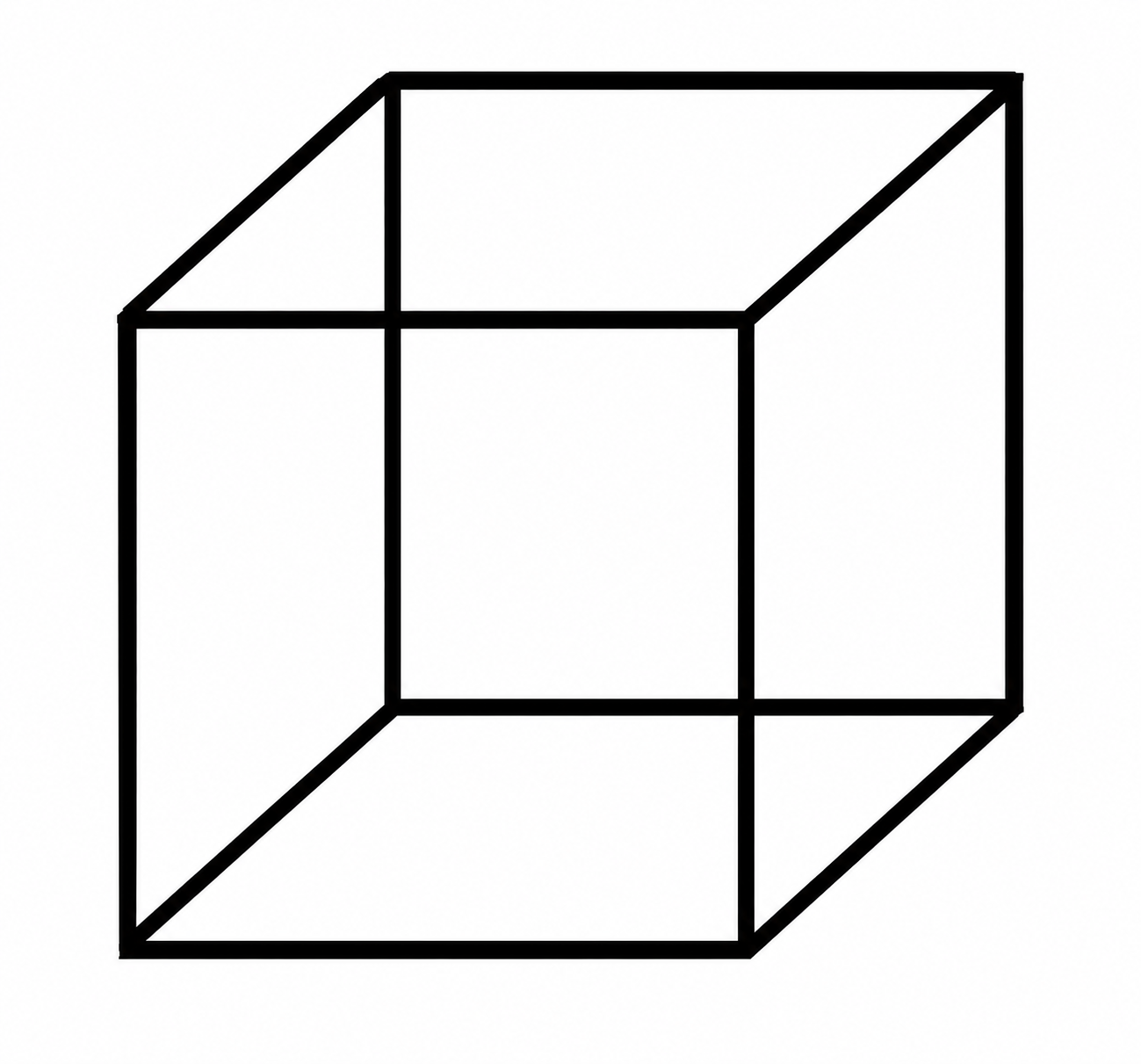
- Natural conception: We see this figure as three-dimensional.
- Reality: It is a two-dimensional figure.
Example 3. Colors
- Natural conception: Objects possess colors, e.g. my hat has red “in it”
- Reality: Colors are the result of
- the object’s spectral reflectance: surface properties of the object that determine what wavelengths are absorbed vs. reflected.
- light illuminating it: broad spectrum (e.g., sunlight) vs. narrow spectrum (e.g., incandescent bulb)
- our visual system (biological make-up of cones in our retina)
Example 3. Colors
Spectral reflectance of a “red” apple reflects more of the longer (“red”) 650nm - 700nm wavelengths and less of the shorter (“blue”) 450nm wavelengths
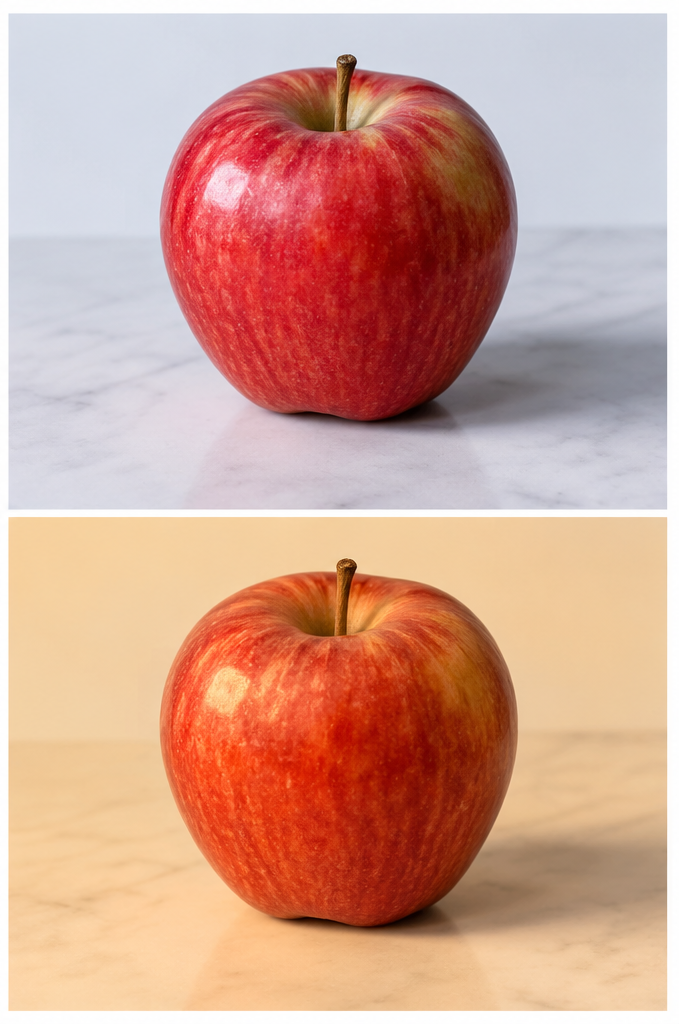
Color inconstancy
Color inconstancy refers to how a single color changes under different lighting conditions
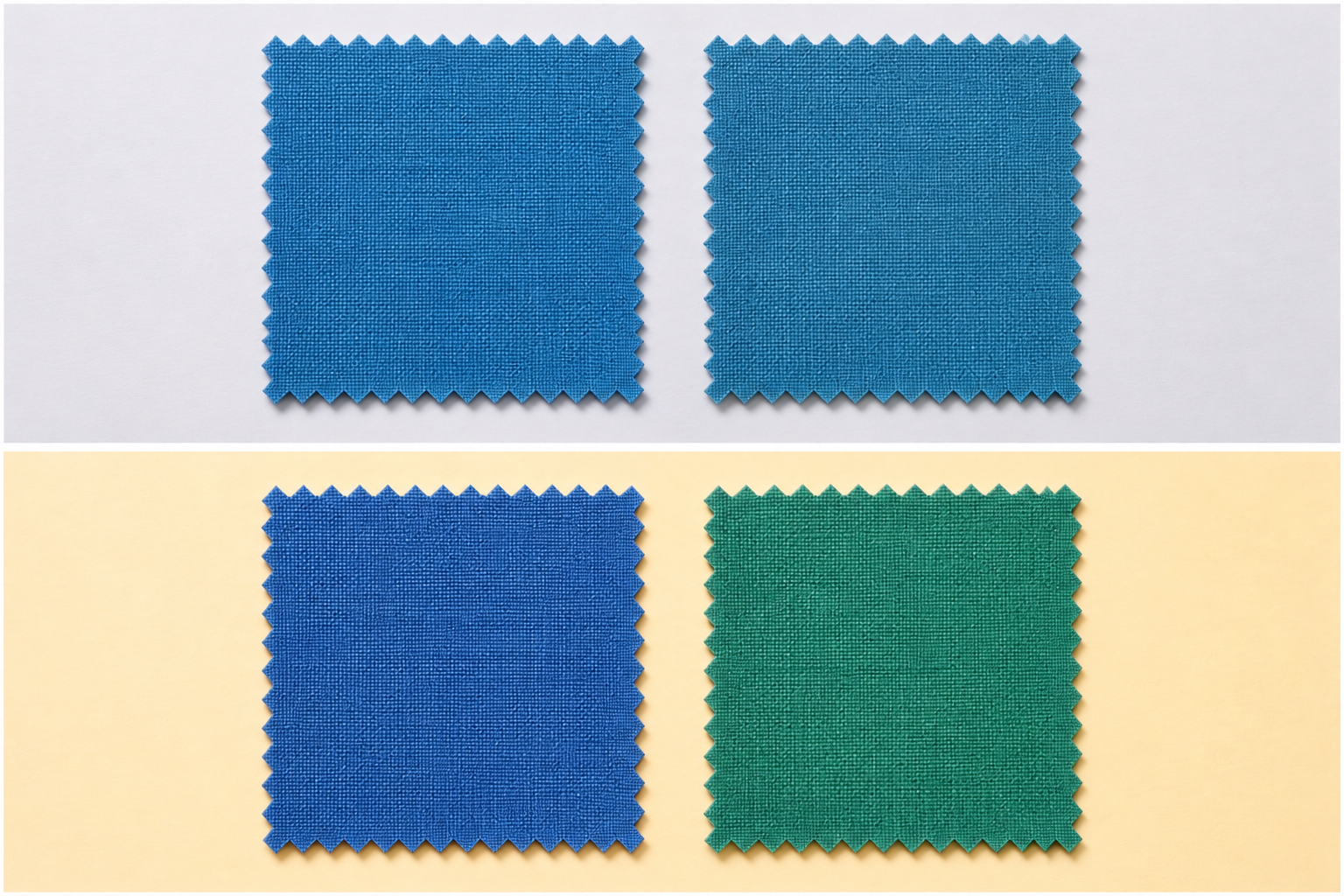
Metamerism
Metamerism refers to the visual phenomenon where two colors (metameric pairs) appear to match under one lighting condition but differ under another.
Exercise
Metabeliefs
We sometimes (1) have a belief \(X\), but (2) we believe that the belief \(X\) (our metabelief) is irrational.
- Example: Imposter Syndrome. I feel like I don’t know metaphysics, but I really do.
- Example. Fear of heights. I feel like I’m going to fall, but I know I won’t.
Intuition 2
With respect to time, we believe
- World is divided into P, N, and F, and
- This belief is rational.
Intuition 2 is a metabelief (intuition about an intuition). It is saying our intuition is rational.
Intuition 3
- Events are past or future
- But events in the present are the only ones that are truly real.
- Phil. terminology: They exist simpliciter.
Existence simpliciter
Some objects exist with qualification:
- Unicorns exist in the mind
- My evil twin exists in some other possible world
- Dinosaurs did exist (exist in the past)
But other objects exist without qualification (simpliciter):
- I exist
- You exist
- Present events exist
Intuition 4
Intuition 4 is one of the most unclear intuitions.
- We are in the present and are moving through time
- The present is constantly changing (which events are in the present is changing).
- There is real change in the world and that relates to the passage of time.
- Time is not fixed (things are not frozen in time).
Illustration
You perform each act in the present.
So, there is a new present coming into existence with each new event.
Summary
There are four core intuitions:
- We conceptualize the world in terms of past, present, and future (exclusive and exhaustive)
- Belief (1) is rational because the world really is divided up into past, present, and future.
- Present moment exists simpliciter.
- Time passes (change is real)