flowchart RL
    A[A wants X]
    B[A does X]
    A e1@==> B
    e1@{ animate: true }
Are we free?
Abstract
Slides for Metaphysics.
Free Will
Our powers
The Great Chain of Being
- We are not God
- We are not stuff
- We are something more than animals
Perhaps what elevates us above the beasts are our powers.
Natural non-living objects (rocks)
- Natural objects cannot even be said to act or make choices
- Rocks do not choose to fall down a mountain
- Eraser does not make any choices
Inanimate stuff of the universe makes no decisions.
Artefacts (bicycles)
- Artefacts (human-made objects) are just like natural objects
- They do not exert any choice on their own
- Insofar as they “make choices”, these choices are due to someone else (actions are programmed)
Example: my self-driving car didn’t freely choose to drive off the cliff.
Animals
Animals (the beasts) are ruled by instincts, genetics, their desires.
- Unlike natural, non-living objects, they do perform actions
- But these actions are due to strongest, most immediate desires or instincts
- They cannot override these desires or weigh the long-term pros and cons.
- Their behavior can only change if outside forces change their desires, e.g., rewards, punishments, conditioning.
Animals (continued)
The behaviors of animals are determined by
- the prior state of their body
- the laws of natural world: chemical reactions, neurological events.
Humans
- Like animals, many of our actions are due to our biology and prior conditioning
- But, we humans are unlike (1) natural, non-living things, (2) plants, (3) artefacts, and (4) animals.
We have a special power: free will!
A Mysterious Power
The Importance of Free Will
R1: Distinguishes persons from beasts
- Important for understanding who we are (our place in the world)
- We are not cogs in a machine
- We have some control over our own destiny
R2: Nec condition for responsibility
The following is often accepted:
If \(O\) is responsible for action \(A\), then \(A\) was performed freely by \(O\).
The contrapositive of this is:
If \(A\) was not performed freely by \(O\), then \(O\) is not responsible for \(A\).
The idea is that you are not responsible for actions that you were “forced” to do.
Examples
- Tek is driving but someone rigged his car so the brakes would go out. He crashes his car.
- Tek is working late, someone drugs his coffee, and he crashes his car.
- Tek is brainwashed to always smile when he sees a baby.
Praise and blame
When we think about responsibility, we often think about praise and blame.
- If we praise (blame) you for action \(A\), then you are responsible for \(A\).
- If you are responsible for \(A\), then you did \(A\) freely.
You don’t deserve blame for an action you were forced to do.
Defining free will
Acting on your desires
Examples
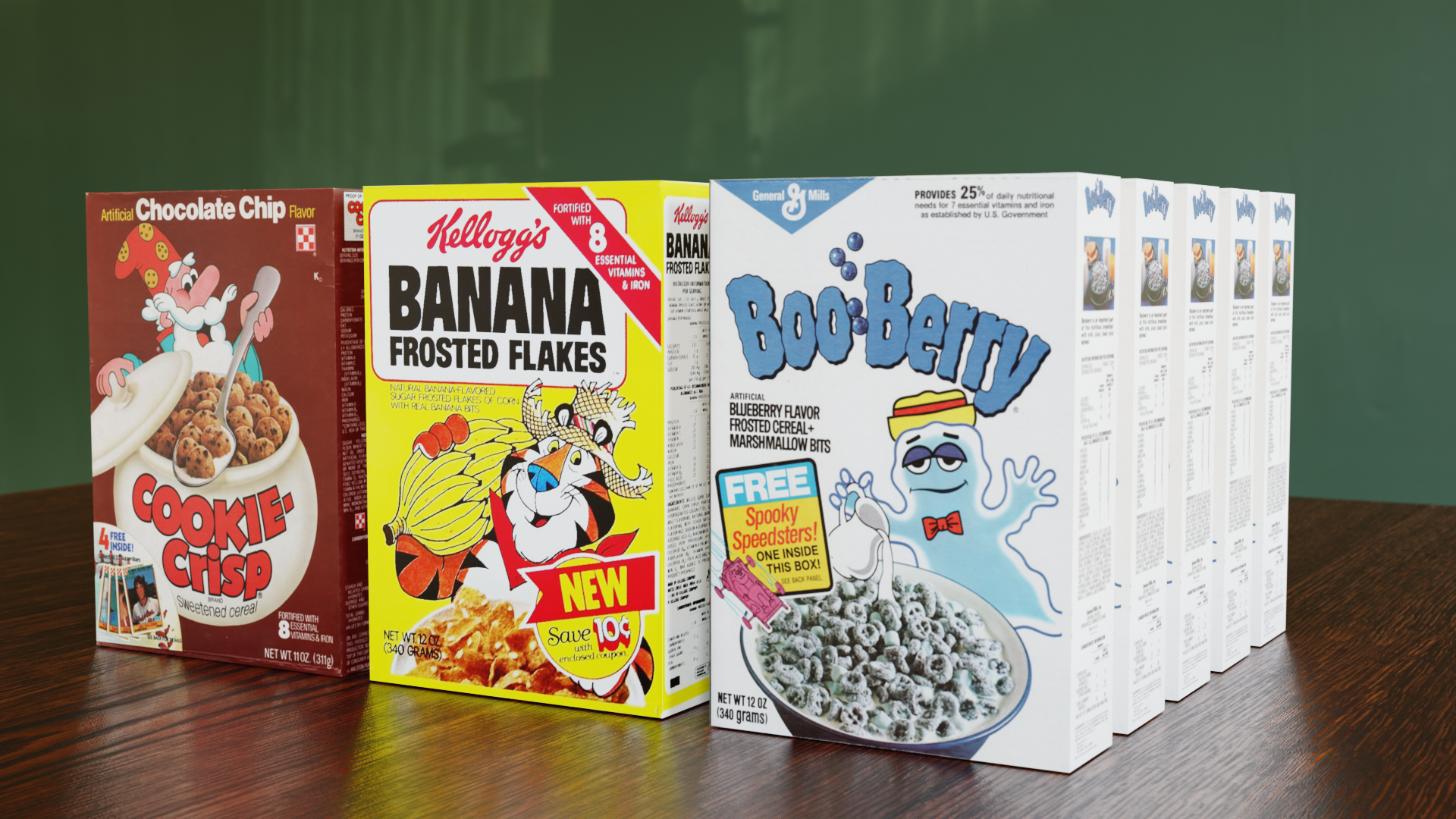
- Tek wants to grab some BFFs, he grabs the BFFs. Therefore, action is free.
- Tek wants to ride his bike. He rides his bike. Therefore, action is free.
- Tek wants to leap over Mt. Everest. He can’t. Therefore, action is not free.
Problem
- You want BFFs
- You acted on that desire.
- Free actions are those actions where you act on your desires.
- Therefore, your action was free.
Problem: where did that desire come from?
Determined desire
Suppose your desire for BFFs was due to:
- advertising
- addictive banana-air pumped into the store
- global cereal shortage
- man threatening your life unless you buy BFFs
- brain operation causing uncontrollable desire for banana cereal
You acted on your desire, but the act was not free because your desire was determined by someone else.
Determining desires exercise
Controlling your desires
Skip.
Ability to do otherwise
flowchart LR
    O[O]
    A[O buys BFFs]
    nA[A does buy BFFs]
    O e1@==> A
    O e2@-.-> nA
    e1@{ animate: true }
flowchart LR
    O[O]
    A[O chooses BFFs]
    nA[A chooses BB]
    O e1@==> A
    O e2@-.-> nA
    e1@{ animate: true }
Ability to do otherwise
In contrast, if you do not have the ability to do otherwise, then you are not free.
- When Tek’s brain is programmed to desire BFFs, he cannot act otherwise.
- Therefore, he is not free.
Garden of forking paths
People who believe that free will is the ability to do otherwise often view lives as a garden of forking paths.
flowchart LR
    a[David]
    a1[Doctor]
    a11[Marries]
    a12[Single]
    b1[Philosopher]
    b11[Marries]
    b12[Single]
    a e1@==> b1
    b1 e2@==> b11
    b1 -.-> b12
    a -.-> a1
    a1 -.-> a11
    a1 -.-> a12
    e1@{ animate: true }
    e2@{ animate: true }
A person’s life turns out one way but it could have turned out differently if they acted differently.
Your garden
Additional clarifications
C1 - Moral and legal
C1: Free will is metaphysical not legal or moral.
- “You can’t hurt others.” = “Hurting me would be illegal.”
- “You can’t hurt others.” = “Lying would be morally wrong.”
You are metaphysically free to hurt others even if it would be illegal or morally wrong.
C2 - Physical possibility
C2: Just because \(X\) is physically possible for \(S\) does not mean \(S\) is free to do \(X\).
- Physically possible for me to run 4 minute mile.
- Physically possible for me to escape prison (gravitational shift causes lock to open) but I am not free to do so.
C3 - Causal capacity
C3: Free action is not simply a causal capacity
- I have a causal capacity to digest meat. I am not really free to digest meat (not an action done by me).
- I have a causal capacity to dodge a hit. Strange to say I did this voluntarily.
Free will seems like an active power tied to our will / volition / choice rather than a reactive causal power done automatically by our bodies.
Understanding vs. speaking
van Inwagen gives the following example:
- We are free to speak English (decision, choice, act of will)
- We are not free to understand English. We do this automatically if we know the language (can’t help it).
C4 - Exercising an ability
There is a distinction between having an ability and having the power to exercise that ability. Free will involves the latter.
- I have the ability to ride a bicycle
- I can’t exercise that ability if my leg is broken
So,
- Free will \(\neq\) having an ability
- Free will entails power to exercise an ability
Summary
Metaphysical freedom
- is not the moral / legal conception
- is not what is physical possible for us
- is not a reactive causal capacity (e.g., digestion, understanding English)
- is having the power to exercise an ability rather than simply having an ability
Clarifying freedom
Free Will Thesis
Free Will Thesis
Ingredients for theory of free will
Ingredients
- The free will thesis is contextualized against the way the world is.
- The world can be one of two ways:
- Deterministic
- Indeterministic
Determinism
The world is deterministic iff determinism is true.
Laplace’s Demon: If a being knew all the laws of nature \(L\) and every particle in the world \(W\) at \(t_1\), they could predict every future event after \(t_1\).
Indeterminism
The world is indeterministic iff indeterminism is true.
- There is at least one future event after \(t_1\) that is not a result of the laws plus the world.
- Does not say every event is indeterministic.
Clarifications
Let’s add some clarifications.
C1 - Contingent claim
Both determinism and indeterminism are contingent claims.
- Whether they are true or false depends upon the nature of our world.
- If it is true of our world, we say “it is contingently true” (could have been otherwise)
C2 - Empirical claim
Both determinism and indeterminism are empirical claims.
- Whether they are true is determined by observing the physical world
- Leave it to the scientists to figure this out.
C3 - Non-deteministic events
What does it mean for an event to be non-deterministically (indeterministically) caused?
- Outside the scope of the laws of nature (physical laws), e.g., activity of the soul
- Fundamentally random: objective chance
Quantum Physics
Some people say quantum physics (QP) proves the world is indeterministic.
Exercise
Free will and the world
- We have the free will thesis
- The world is deterministic or indeterministic
Let’s formulate some theories about free will:
- Impossibilism
- Incompatibilism
- Compatibilism
Spoiler: None of these theories will really tell you if you are free.
Impossibilism
flowchart LR
    A[Am I free?]
    D[Determinism]
    I[Indeterminism]
    N["Not Free"]
    A e1@== maybe ==> D
    A e2@== maybe ==> I
    D == nah ==> N
    I == nah ==> N
    e1@{ animate: true }
    e2@{ animate: true }
Incompatiblism
flowchart LR
    A[Am I free?]
    D[Determinism]
    I[Indeterminism]
    N["Not Free"]
    M["?"]
    A e1@==> D
    A -.-> I
    D == nah ==> N
    I -.-> M

    e1@{ animate: true }
There are no deterministic possible worlds where humanlike creatures are free (have the ability to do anything other than what they do).
Incompatiblism and indeterminism 1
Free will thesis is true in indeterministic worlds
flowchart LR
    A[Am I free?]
    D[Determinism]
    I[Indeterminism]
    N["Not Free"]
    M["Freeeedom!"]
    A e1@==> D
    A -.-> I
    D == NO ==> N
    I -.-> M

    e1@{ animate: true }
- Many incompatibilists think we are free only if the world is indeterministic.
- Also claim that if we were not free, then the position is just impossibilism.
Incompatiblism and indeterminism 2
Some incompatibilists are agnostic about whether we are free in indeterministic worlds.
flowchart LR
    A[Am I free?]
    D[Determinism]
    I[Indeterminism]
    N["Not Free"]
    M["?"]
    A e1@==> D
    A -.-> I
    D == NO ==> N
    I -.-> M

    e1@{ animate: true }
Incompatiblism clarification
Incompatibilism does not say
- we are not free.
- the world is deterministic
They only say:
IF the world is deterministic, THEN we are not free.